The First Step of Securing AI is the Inventory
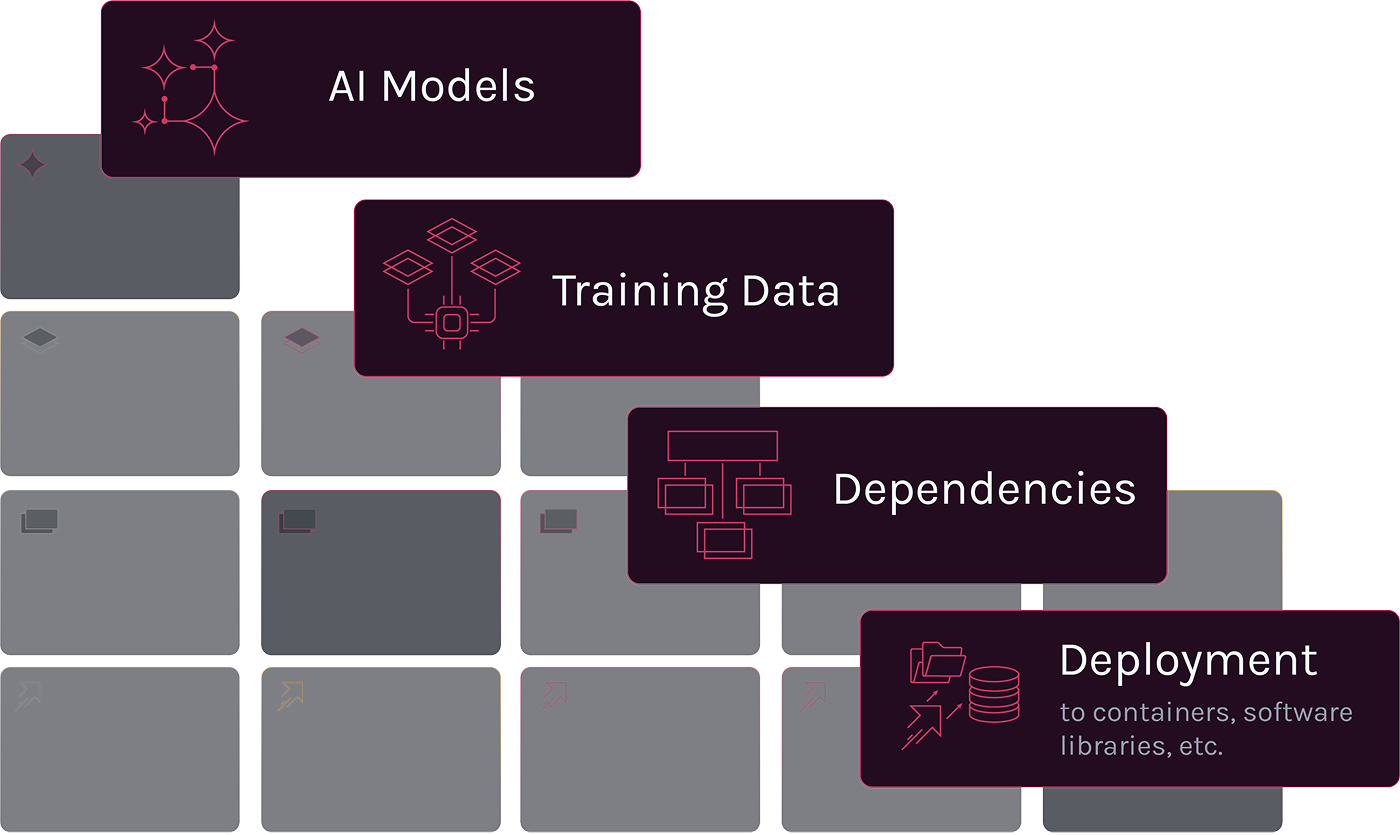
An AI Bill of Materials (AIBOM) is a structured inventory that documents all the components within an AI system.
- Datasets used to train or fine-tune models.
- Models themselves, including open-source or proprietary.
- Software dependencies that support AI pipelines.
- Deployment environments where models run.
Why AIBOMs Matter
AI introduces powerful opportunities and complex risks. Without visibility, organizations cannot confidently manage compliance, security, or trust. An AIBOM helps organizations:
Demonstrate adherence to evolving frameworks like the EU AI Act, NIST AI RMF, and DoD AI security directives.
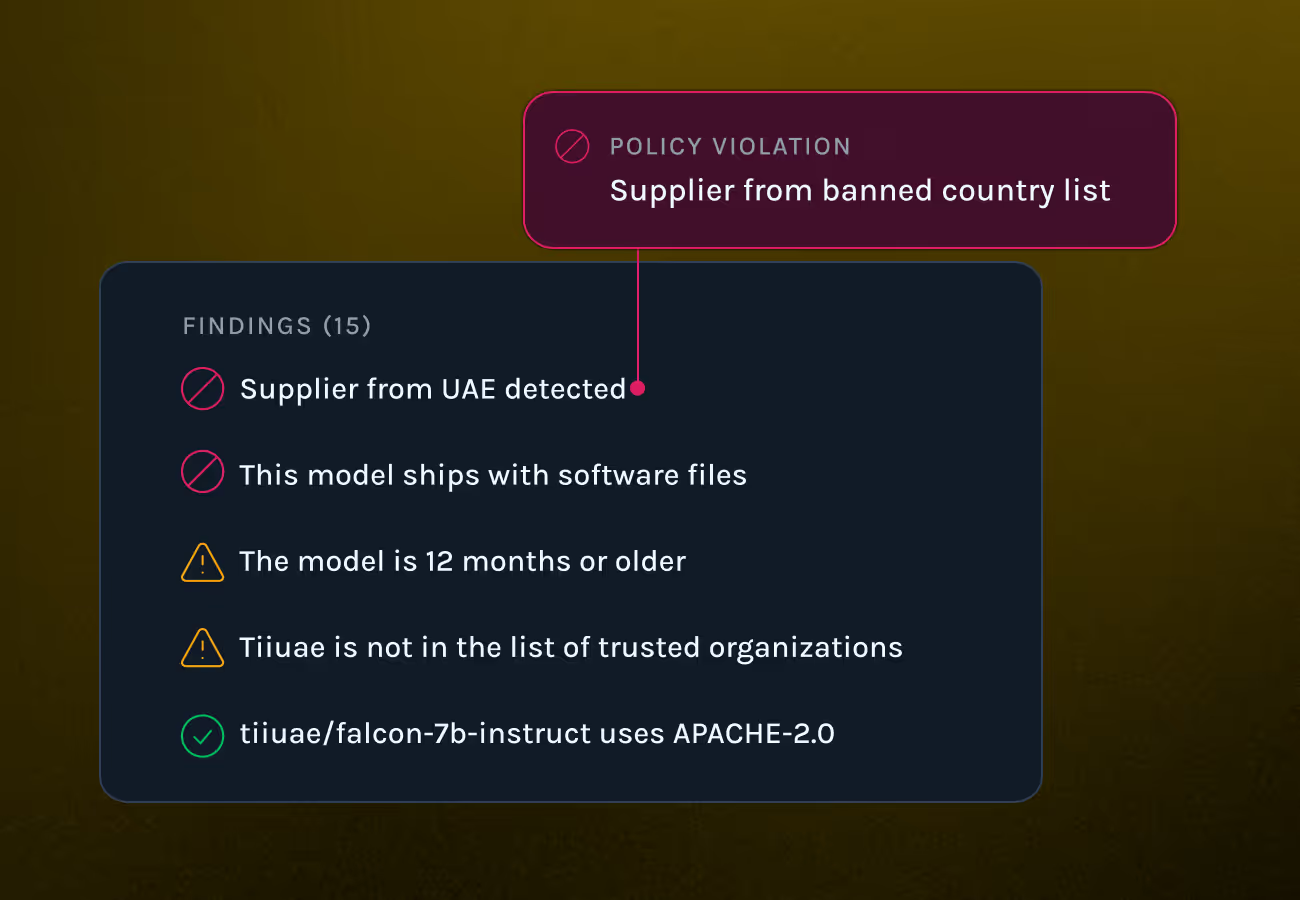
Detect risky datasets, licenses, and vulnerable software dependencies.
Provide regulators, partners, and customers with proof of responsible AI practices.
Respond quickly to audits, incidents, or questions about your AI supply chain.
AIBOMs and SBOMs: Building a Complete Supply Chain Picture
Securing modern AI systems requires visibility across both software and AI-specific components. Organizations should leverage AIBOMs and SBOMs together to gain a complete view of their technology supply chains:
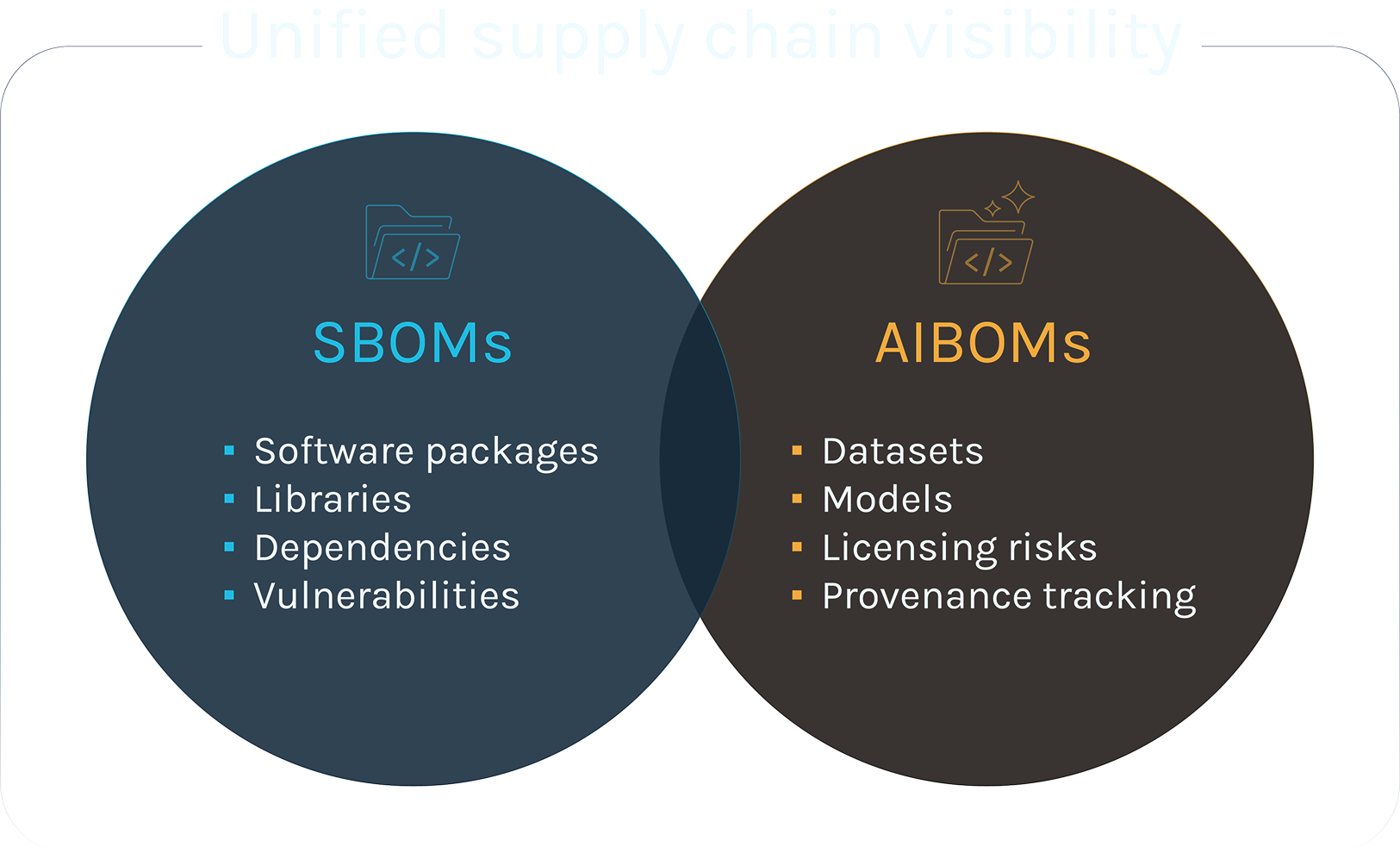
- SBOMs map the software packages, libraries, and dependencies that underpin applications and AI pipelines.
- AIBOMs extend this visibility to cover datasets, models, and AI-specific risks that traditional SBOMs cannot capture on their own.
- Together, they provide a unified approach to supply chain security, ensuring organizations can identify vulnerabilities, validate provenance, and demonstrate compliance across both software and AI systems.
From Theory to Practice: Manifest’s Approach
At Manifest Cyber, we believe an AIBOM is not just a document, it’s a living operational artifact. We help organizations make AIBOMs actionable through a continuous, integrated approach. This practical path turns AIBOMs from a static inventory into a dynamic governance capability.
- Discover AI assets across the enterprise, including shadow AI.
- Document datasets, models, and dependencies in a structured format.
- Integrate AIBOM insights into compliance, security, and vendor risk workflows.
- Monitor continuously as AI systems evolve, ensuring audit readiness and resilience.
FAQs
An AIBOM is a structured inventory that provides transparency into datasets, models, software, and deployment environments.
AIBOMs help organizations manage compliance, detect risks, and demonstrate trustworthy AI practices.
SBOMs track software dependencies; AIBOMs go further by including datasets and models, the core of AI systems.
Organizations can begin by inventorying AI assets, then documenting datasets, models, and dependencies before integrating AIBOMs into compliance and security workflows.