Manage Risks, Vulnerabilities, and Licenses
Identify and remediate vulnerabilities in open source components before they’re exploited.
Automate detection of non-compliant or high-risk OSS licenses.
Prevent “shadow OSS” from slipping into production without visibility or approval.
Maintain an up-to-date, auditable inventory of OSS usage across your enterprise.
Manage OSS: Inventory, Risks, and Compliance
Streamlining OSS Risk Identification with Manifest
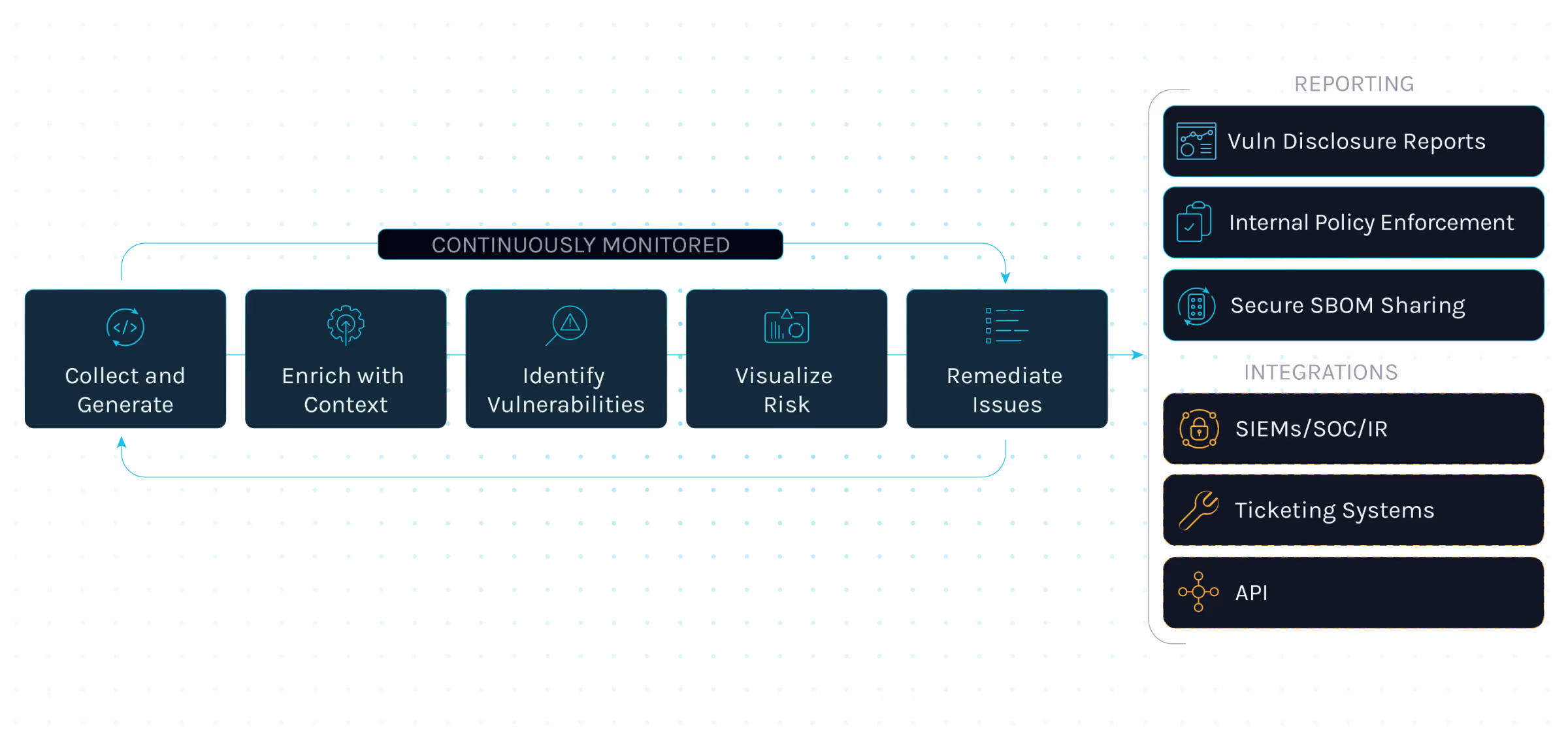
Manifest provides open-source tracking as part of its broader software supply chain security platform:
- OSS Inventory
Automatically discover OSS components across codebases, pipelines, and applications.
- License Compliance
Flag restrictive or incompatible licenses and enforce compliance policies automatically.
- Vulnerability Monitoring
Continuously scan OSS dependencies against CVE databases and enrich with exploitability data (EPSS, KEV).
- Unified Risk View
Integrate OSS tracking into SBOMs, supplier risk, and governance modules for a complete supply chain perspective.
FAQs
Open source software (OSS) tracking is the process of identifying, monitoring, and managing all open source components within your applications. It ensures you know which libraries you’re using, whether they contain vulnerabilities, and if their licenses align with your organization’s compliance policies.
Open source software often introduces vulnerabilities that attackers can exploit. Without tracking, organizations risk relying on outdated or unpatched OSS libraries. Manifest’s open source tracking continuously monitors components against CVE databases and highlights issues based on real exploitability, not just CVSS scores.
Manifest automatically inventories your open source components, monitors them for known vulnerabilities, and enriches results with exploitability data such as EPSS and KEV. This helps security teams prioritize which OSS vulnerabilities matter most and respond faster.
SBOMs are the foundation of strong open source software tracking. An SBOM provides the inventory of open source components within your applications, while open source tracking builds on that inventory with continuous monitoring, vulnerability detection, and license compliance. In other words, SBOMs give you visibility, and tracking ensures that visibility stays current, actionable, and tied to risk management.