Questionnaires Don’t Stop Risk
Traditional TPRM looks at the vendor, not the product. Security teams are expected to trust PDFs, spreadsheets, and claims like “we follow best practices,” without seeing what is actually inside shipped software.
Manifest turns TPRM from reactive trust into proactive verification.
Major blindspots in questionnaires:
No visibility into third-party components and dependencies.
Waiting for vendors during zero-days and disclosures
One-time reviews that quickly become outdated
No independent way to validate product security
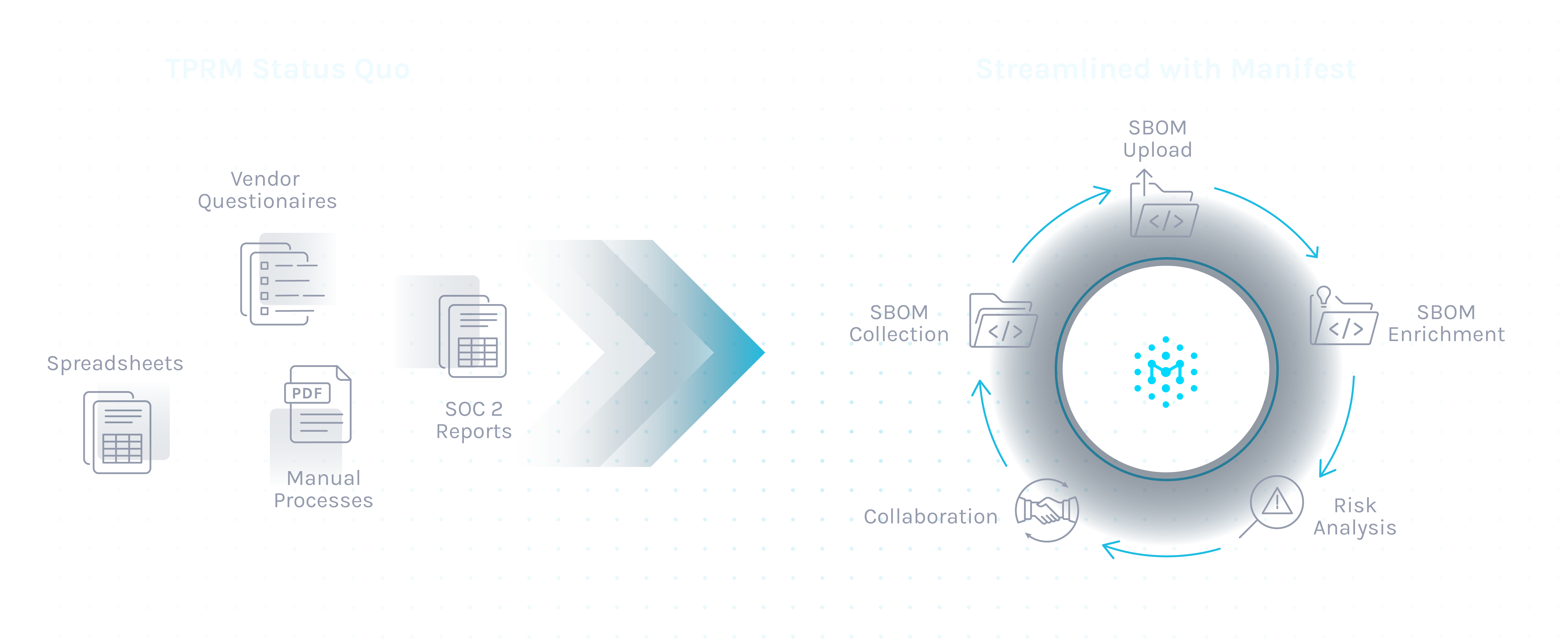
Why We Need a New Approach to TPRM
Too many TPRM programs pay a hidden transparency tax. Real change means shifting the burden of proof onto suppliers and demanding evidence, not promises.
See what is inside third-party software instead of trusting vendor answers.
Identify exposure fast, without waiting for vendor disclosures.
Stop paying for delays, rework, and blind incident response.
Require transparency from suppliers and raise the bar for your software ecosystem.
Burden of Proof, Not Promises
Manifest enabled a major defense contractor to hold a supplier accountable.
A major defense contractor partnered with Manifest to assess a third-party weapons system. Manifest uncovered several critical software vulnerabilities that were not previously disclosed, problematic licenses, and outdated dependencies maintained by questionable foreign owners. Instead of waiting for notification, the buyer enforced remediation and received a clean build within days, reducing exposure and strengthening supplier accountability.
How Manifest Modernizes TPRM
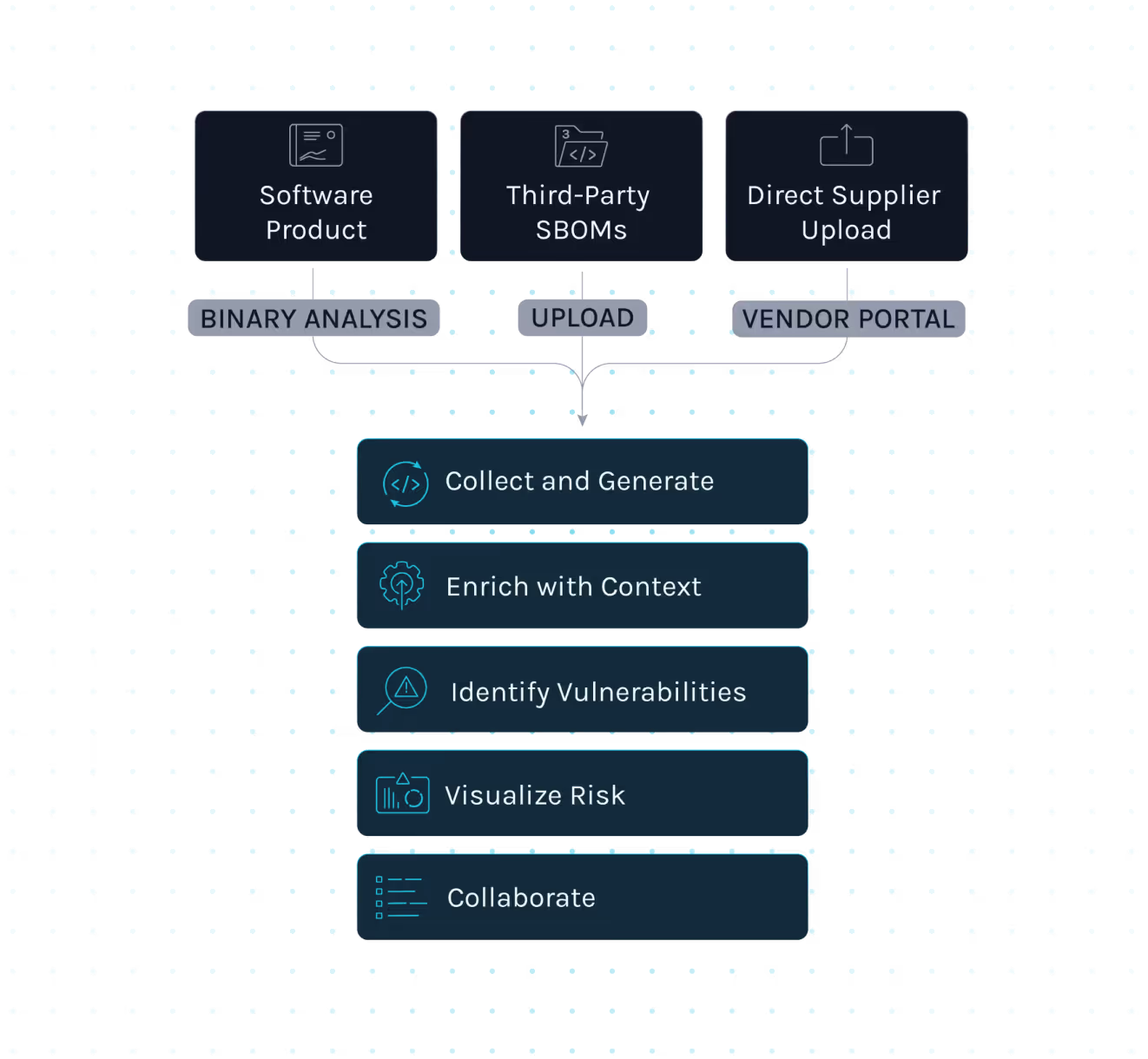
- Verify software contents and dependencies
- Continuously monitor supplier risk
- Automate TPRM evidence for audits and regulations
- Enforce transparency as a condition of doing business
FAQs
FDA, DoD, and automotive requirements are pushing SBOM-driven transparency upstream. Manifest helps organizations comply and compete.
Traditional tools evaluate the vendor. Manifest evaluates the software itself and delivers evidence, not opinions.
Manifest provides data-driven verification using SBOMs, binary analysis, and continuous monitoring.
They are self-reported, manual, and reactive. They don't reveal the real risk inside the product.
Modern third-party risk management (TPRM) is a product-centric approach that verifies what is inside third-party software, not just what a vendor claims on a questionnaire.